
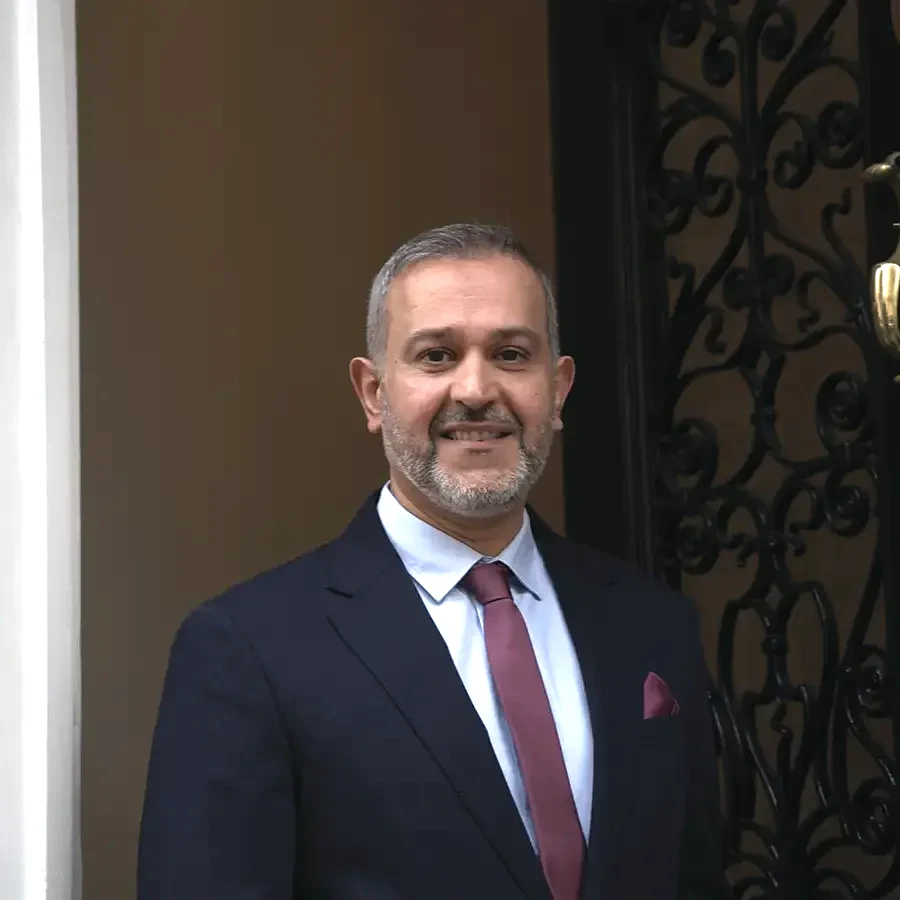
 Dr Omar Ali, consultant interventional cardiologist GMC 4728870
Medical review by Dr Omar Ali: 18 November 2026
Or if you notice signs of a stroke: a drooping face, a weak arm, or difficulty speaking.
What it is
In atrial fibrillation (AF), the upper chambers of the heart beat irregularly instead of in a steady rhythm. It can come and go, or be there all the time.
Symptoms
- Palpitations: a fluttering, racing or irregular heartbeat
- Breathlessness and tiredness
- Dizziness
Some people have no symptoms, and AF is found on a pulse check or an ECG.
Why it matters
Blood can collect and clot in the upper chambers, which raises the risk of a stroke. Assessing this risk is a key part of your care.
How Dr Ali assesses it
An ECG at the clinic, a heart monitor if the rhythm comes and goes, an echocardiogram and blood tests, including your thyroid.
Treatment
- Medicines to thin the blood, if your stroke risk calls for them
- Medicines to control the heart rate or restore a normal rhythm
- For some people, a procedure such as cardioversion or catheter ablation
- Treating causes such as high blood pressure or an overactive thyroid
Questions
Is atrial fibrillation dangerous?
It is not usually an emergency, but it raises the risk of stroke, which treatment lowers.
Will I need blood thinners?
It depends on your stroke risk, which Dr Ali works out with you.
Can atrial fibrillation be cured?
Treatments that restore a normal rhythm, such as cardioversion or catheter ablation, can stop it for long periods, although it can come back. Many people live well with atrial fibrillation that is controlled with medicines.
Want to talk it through? Book a consultation with Dr Ali, or call 020 8087 4742.