
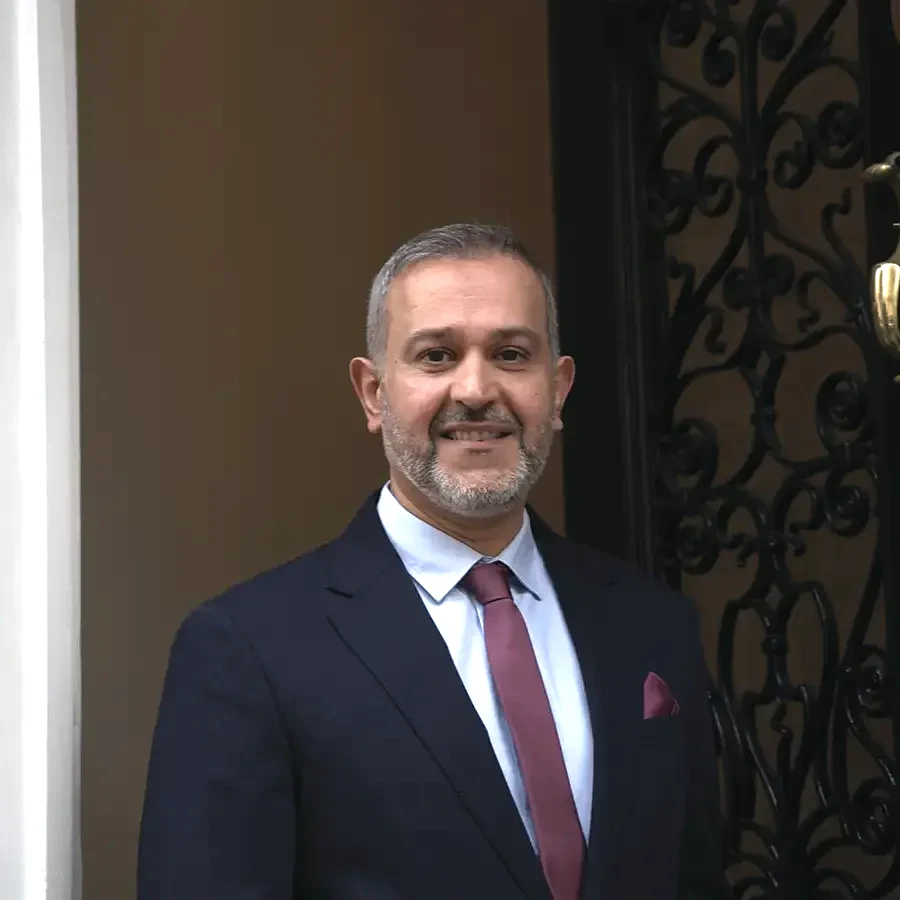
 Dr Omar Ali, consultant interventional cardiologist GMC 4728870
Medical review by Dr Omar Ali: 18 November 2026
Or if you feel very unwell during an episode.
What palpitations are
Palpitations are when you become aware of your heartbeat. Common causes include extra beats (ectopic beats), caffeine, alcohol, stress, an overactive thyroid and some medicines. Most are harmless, but some come from a heart rhythm problem.
Atrial fibrillation
Atrial fibrillation (AF) is one of the most common heart rhythm problems. The heartbeat becomes irregular and often fast. It can cause palpitations, tiredness or breathlessness, or no symptoms at all. It becomes more common with age.
AF matters because it raises the risk of stroke: an irregular rhythm lets blood pool in the upper chambers of the heart, where clots can form.
When to see a cardiologist
- Palpitations that are frequent, long-lasting or getting worse
- Palpitations with dizziness, fainting or chest discomfort
- A known heart condition
- A family history of sudden death at a young age
How Dr Ali finds the cause
An ECG at your consultation, then usually a heart rhythm monitor worn for 24 hours or longer to catch symptoms when they happen. An echocardiogram checks the heart's structure, and blood tests include thyroid function.
Treatment
When palpitations are harmless, a clear explanation is often all that is needed. For AF, treatment aims to control the heart rate or rhythm and to lower the risk of stroke, which may include a blood thinner. Some people benefit from a procedure called ablation, carried out by a heart rhythm specialist.
Questions
Are ectopic beats dangerous?
In a structurally normal heart they are usually harmless, though they can be unsettling. Tests can confirm that the heart is otherwise healthy.
My ECG was normal but I still get palpitations. Why?
A resting ECG only records a few seconds. A monitor worn for longer is more likely to catch an episode.
How is atrial fibrillation treated?
It can be treated with medicines, with cardioversion (a controlled electrical shock, under sedation, that resets the rhythm) or with a procedure called ablation. Treatment also aims to lower the risk of stroke, which may mean a blood thinner.
Want to talk it through? Book a consultation with Dr Ali, or call 020 8087 4742.